

by Liz Bonis, WKRC | Click here to watch the full interview.
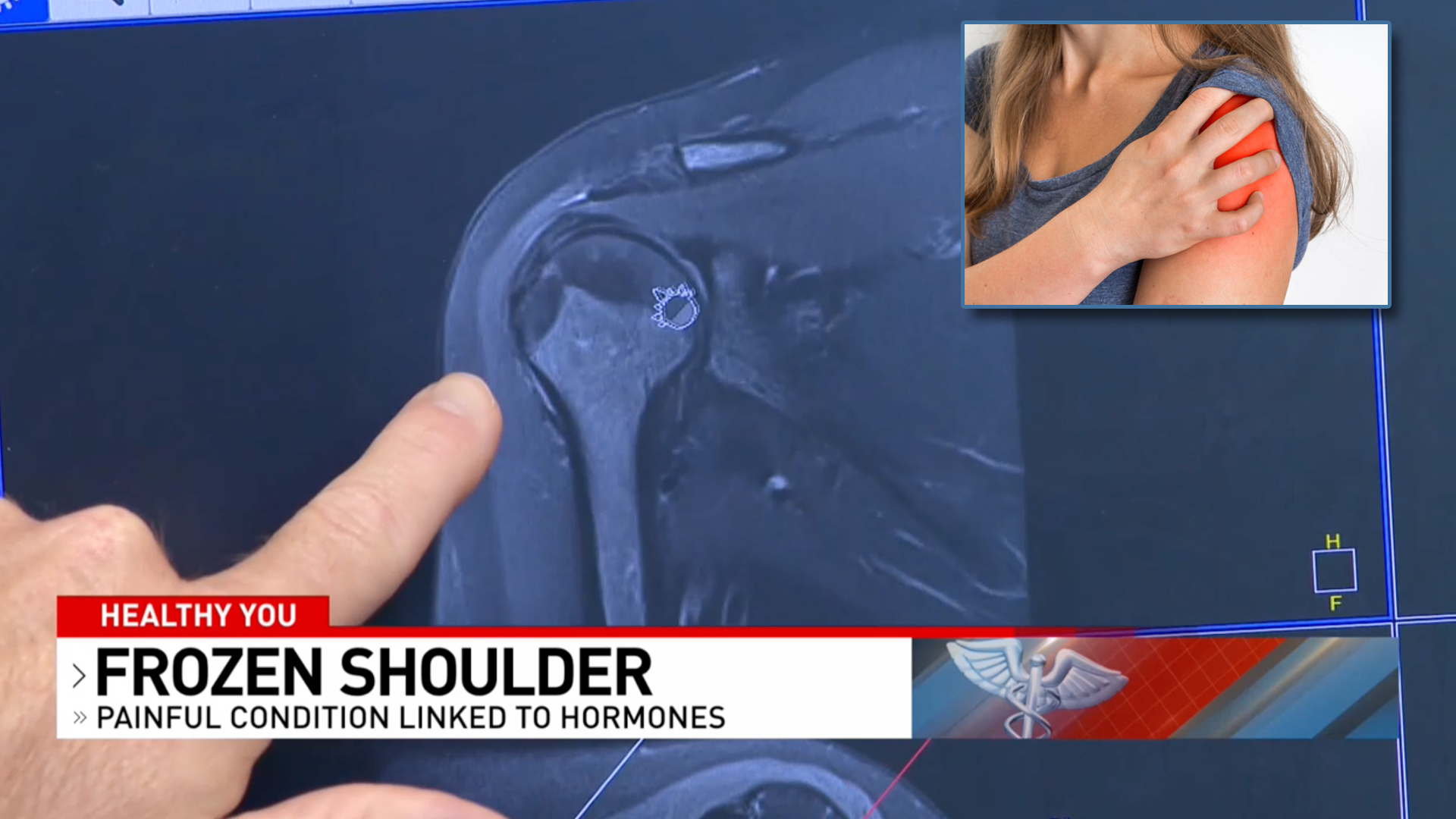
CINCINNATI (WKRC) — If you’re struggling with limited shoulder movement, you might be dealing with a condition known as frozen shoulder, a painful ailment that predominantly affects women.
According to orthopedic surgeons at OrthoCincy, while the exact cause remains unknown, certain risk factors can increase the likelihood of developing this condition.
“Frozen shoulder is an inflammatory condition which affects the ligaments around your shoulder and it makes them freeze up, we say,” said Dr. Trevor Wilkes, an orthopedic surgeon at OrthoCincy.
Dr. Wilkes identified three main risk factors:
“We know that it is almost three to four times more common in women, diabetics, and people with hormone problems like thyroid disease.”
Research suggests that the condition may also be influenced by the body’s own immune response.
“There’s actually been some basic science research identifying antibodies which are the way your body usually fights intruders, which is actually mistakenly attacks your shoulder, causing the frozen shoulder,” said Dr. Wilkes.
Recovery from frozen shoulder is possible, though it requires patience and physical therapy.
“The biggest thing is going to be your range of motion, so pushing that the most, because they are going to be pretty locked up in rotation both ways and reaching overhead, so the more you can get that the faster—or the faster you can get that the better,” said Dennis Mirosh, a physical therapist at OrthoCincy.
With consistent physical therapy, the condition typically resolves in about 18 months. Most insurance plans cover physical therapy, and OrthoCincy offers resources for those seeking treatment.